

Transmission Range Switch Failure? vika 0B5927321L Solution for Audi 2.0T
07-15,2026
For Audi car owners, it may not be uncommon to experience a strong jolt when shifting into D or R gear, along with flickering of the gear indicator or incorrect information on the instrument cluster, caused by a transmission range switch failure.
In the automotive aftermarket, this failure is predominantly found in a fleet of over 2.5 million vehicles worldwide – specifically, Audi models equipped with the 2.0T engine.
From a technical standpoint, this article provides an in-depth analysis of the operating principles of the transmission range switch, the root causes of its common failures, and how upgrading parts can permanently resolve this persistent issue.
Working principle of transmission range switch
The core function of a transmission range sensor is to detect the current physical gear position of the transmission in real time.
Signal transmission and interlocking logic:
Converting mechanical positions into electrical signals: The sensor seamlessly translates the actual mechanical position of the driver-operated gear lever into precise electrical signals, utilizing either Hall-effect or inductive sensing principle.
Transmission to the electronic control systems: This signals are transmitted in real time to the transmission control unit (TCU) and the engine control unit (ECU).
Multi-system coordination: This high-frequency signal enables coordination of different system functions, including real-time gear indication on the instrument cluster, starter interlock safety (engine start permitted only in P or N), precise shift logic control, and ancillary functions such as reverse lights and parking sensors.
In the event of a switch failure, the signal transmission chain is interrupted or distorted. This prevents the TCU from determining the correct gear position, which in turn triggers transmission limp mode, characterized by harsh shifting and a flashing gear indicator.
Core failure causes of the transmission range switch:
Based on aftermarket data collected from main global regions, including Europe (65%), Asia-Pacific (28%), and the Middle East (7%), replacement rates for this switch peak at vehicle mileages between 80,000 and 120,000 km, or at 5 to 7 years of age. The three main failure modes are outlined below:
1. Open or short circuit of internal circuitry
Due to the long-term exposure of the transmission to high temperatures and vibration during operation, the printed circuit board (PCB) inside the sensor is prone to thermal fatigue, which can cause micro-cracks in solder joints or wear of wire insulation, resulting in intermittent open or short circuits.
2. Hall element failure and signal drift
Original OEM sensors often employ a coil induction structure, which offers limited immunity to electromagnetic interference. As the sensor ages, the performance of the internal Hall element degrades, leading to output signal drift. When the TCU receives an ambiguous gear-position voltage signal, it results in erratic shifting behavior and a flashing gear indicator.
3. Power supply and ground faults
Prolonged exposure of the wiring harness or connector to transmission fluid and moisture can cause oxidation and corrosion, leading to increased contact resistance. The resulting increase in contact resistance can deprive the sensor of adequate power or a reliable ground, causing the sensor to become intermittently disconnected.
vika transmission range switch: a targeted solution to structural deficiencies of OEM parts
To resolve the high failure rate of the Audi 0B5927321L transmission range switch, vika has developed a fully upgraded replacement. It offers a permanent fix, providing a "one-and-done" solution for the global market.
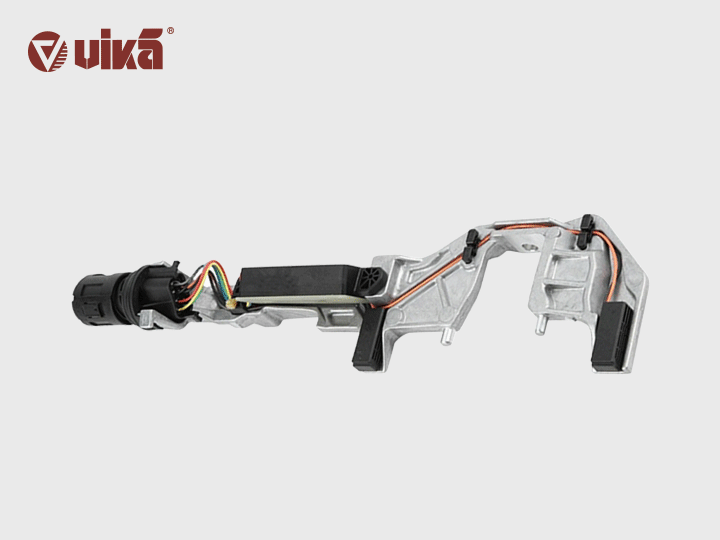
1. High precision: chip replacing the original coil
The original coil structure is replaced with a chip-based solution, which offers improved accuracy, enhanced stability, and longer service life.
2. High-temperature resistance – automotive-grade components
The transmission is subjected to extreme thermal stress, particularly during aggressive driving or in heavy traffic. To address this, the vika range switch is built with automotive-grade components, which ensure stable signal output even under extreme temperatures.
3. Corrosion resistance – dedicated oil-resistant wiring harness
vika transmission range switch – compatibility list:
Vehicle models:
| Series | Model | Year |
|---|---|---|
| A4 | A4 | 08–12 |
| A4 Quattro | 08–12 | |
| A4 | 13–15 | |
| A4 Quattro | 13–15 | |
| A4 Allroad | 10–16 | |
| A5 | A5 Cabriolet | 10–11 |
| A5 Cabriolet | 12–17 | |
| A5 Coupe | 08–11 | |
| A5 Coupe | 12–16 | |
| A6 | A6 | 11–14 |
| A6 Quattro | 11–14 | |
| A6 | 15–18 | |
| A6 Quattro | 15–18 | |
| A6 Allroad | 13–18 | |
| A7 | A7 | 11–14 |
| A7 | 15–18 | |
| Q5 | Q5 | 09–12 |
| Q5 | 13–17 | |
| RS | RS4 | 13–16 |
| RS5 | 10–16 | |
| RS5 Cabriolet | 13–16 |
Engines:
2.0T CGLC,CJCD, CSUA,CNCD
Conclusion
Despite its compact size, the transmission range switch plays a critical role in shift quality and driving safety. When a vehicle displays signs of harsh shifting or a flickering gear indicator between 80,000 and 120,000 kilometers, prioritizing an inspection of the range switch can resolve the issue at a lower repair cost.
Opting for the vika transmission range switch provides a high-precision, chip-based alternative to traditional coil-based structures. This upgrade delivers improved signal stability and extended durability, ensuring consistent and dependable shift performance for your vehicle.
Recent News
- -Fix Audi Noise & Steering Pull: vika Control Arm Bushing Kit
- -VW 1.6 2.0 TDI Tandem Pump 04L145208D: Failures & vika Fix
- -vika Steering Tie Rod Repair Kit: Fix Chassis Noise & Drift
- -vika Thermostat Assembly: Designed to Solve Coolant Leakage and Check Engine Light Issues
- -Connecting the World and Empowering the Industry! vika DPA Debuts at Automechanika Frankfurt 2026
- -Why Should the Timing Belt and the Coolant Pump Be Replaced as a Set?


