

Audi coolant flow coolant valve leaks? vika permanent solution
08-05,2026
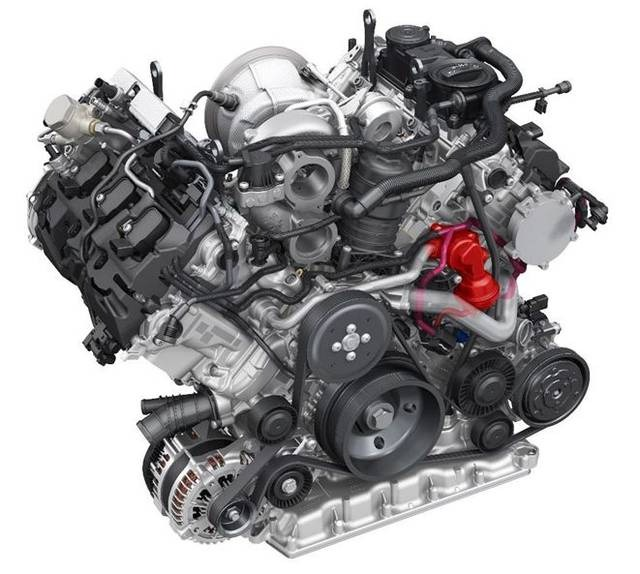
What is the EA839 coolant flow control valve?
The EA839 coolant flow control valve (thermal pneumatic valve) is a precision core actuator within the thermal management system of Audi's 3.0T EA839 series engine.
Its main role is to shut off coolant flow to the cylinder block during cold starts, allowing the cylinder head to heat up quickly, thereby reducing warm-up time, fuel consumption, and emissions from a cold start.
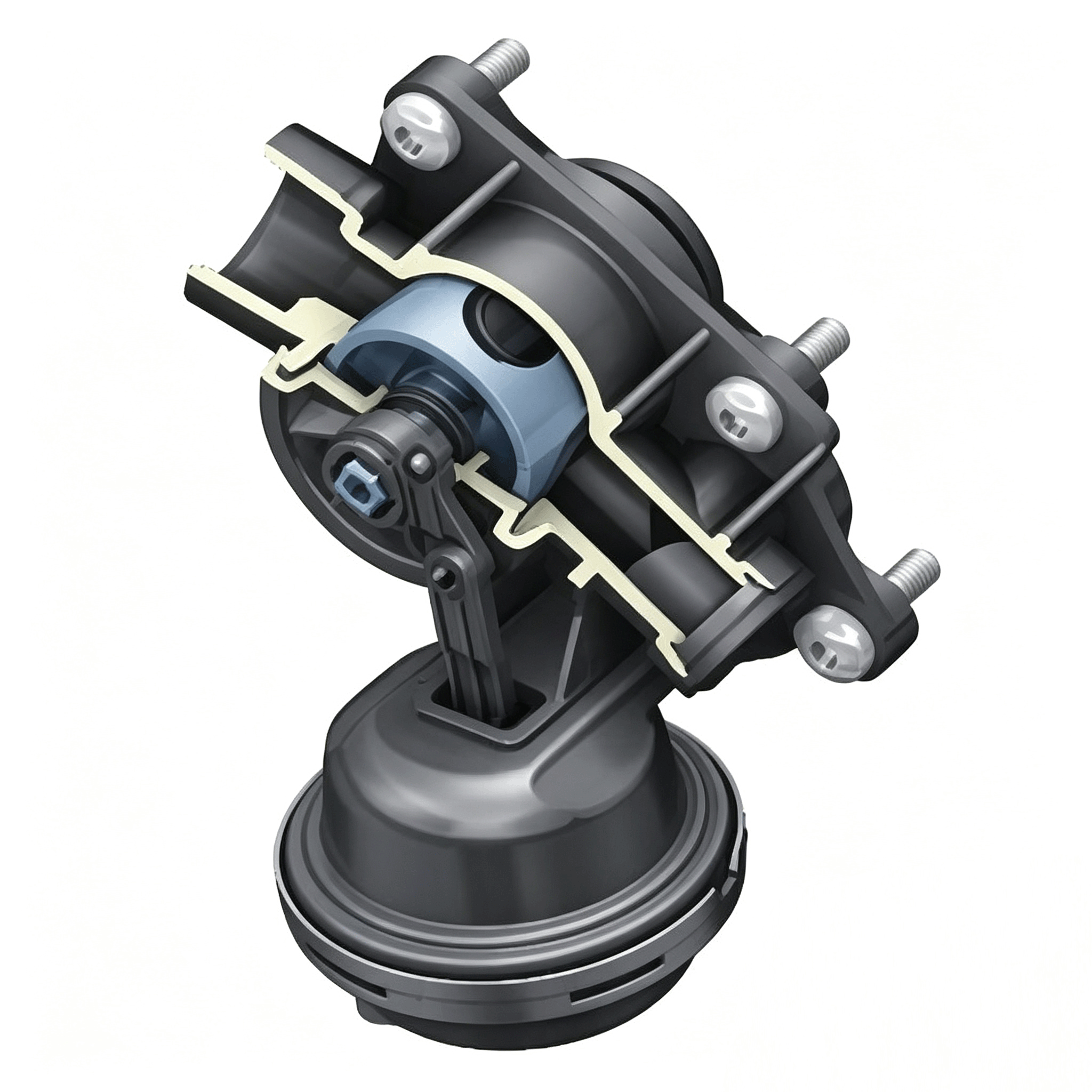
Working principle of the coolant flow control valve
Cold start stage (valve closed)
During a cold start, the engine must reach its operating temperature as rapidly as possible. To achieve this, the solenoid valve activates the vacuum actuator, generating negative pressure that pulls the diaphragm. This action causes the connecting rod to rotate the valve core by 90°, thereby blocking the coolant passage in the cylinder block and halting coolant circulation within it. Consequently, coolant is redirected exclusively through the cylinder head and the heater core circuit, enabling the cylinder head to warm up rapidly.
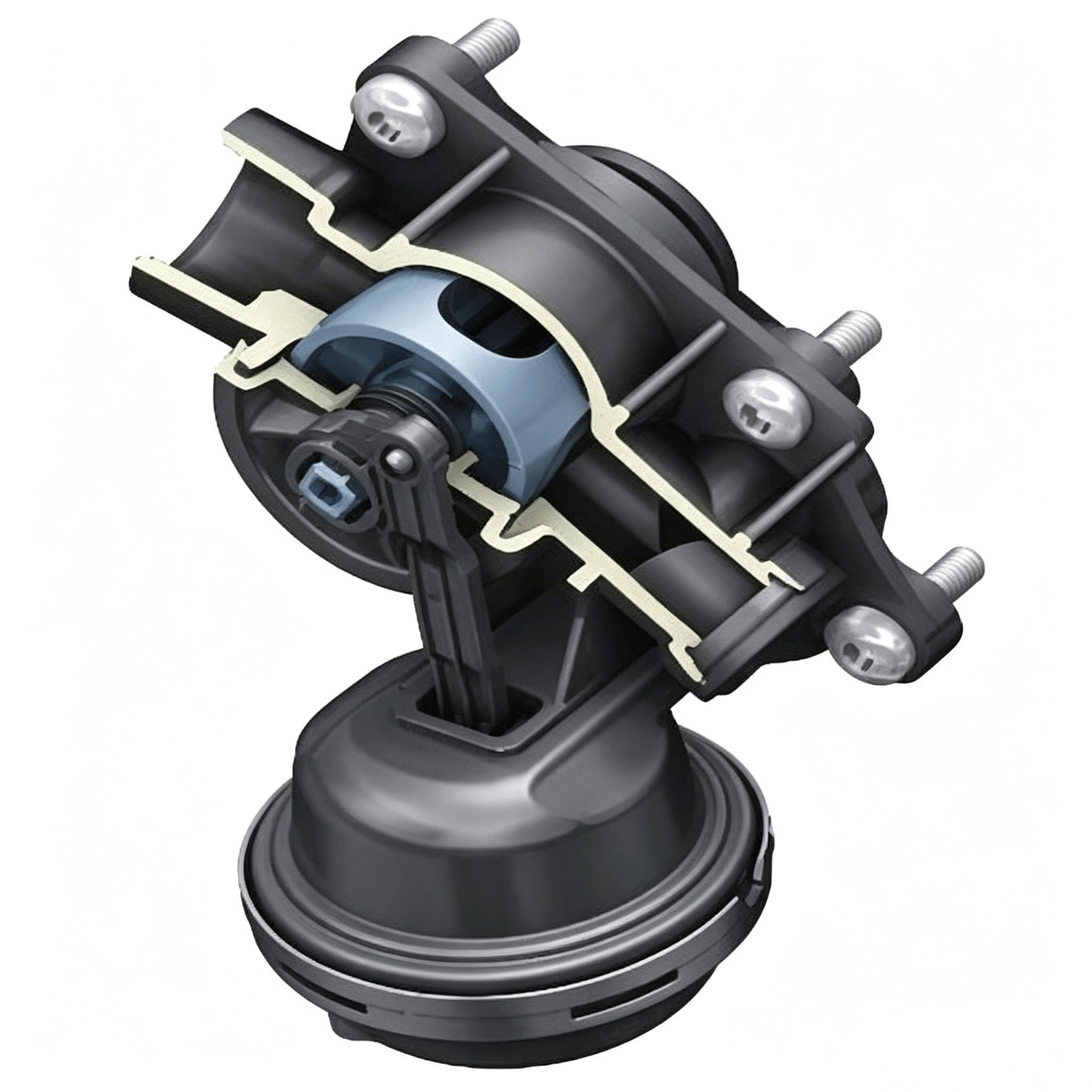
Normal operation stage (valve open)
Once the engine reaches operating temperature, the solenoid valve releases the vacuum, allowing the return spring to rotate the valve core back to its original position. This reopens the cylinder head and cylinder block coolant passages, restoring full coolant circulation. With coolant now flowing through both the cylinder head and block water jackets, effective heat dissipation is achieved, preventing overheating under high-speed operation.
Common failures and symptoms of the EA839 thermal pneumatic valve
After tens of thousands of kilometers of service, the original valve body is highly prone to degradation due to prolonged exposure to thermal cycling, mechanical vibration, and coolant-induced erosion. Common failure symptoms can be categorized into the following three types:
Valve core stuck open: Symptoms include prolonged warm-up time from cold start, delayed heater output, and significantly elevated cold-start fuel consumption.
Valve core stuck closed: Symptoms include sustained absence of coolant circulation in the cylinder block, local cylinder block overheating, elevated engine oil temperature, and abnormal coolant temperature.
Diaphragm rupture / valve body leakage: Symptoms include coolant seepage in the engine bay, moisture ingress into the vacuum system, and consequent damage to the vacuum solenoid valve.
The vika upgraded coolant flow control valve permanently resolves leakage problems
To counteract the material degradation of the original valve body under sustained high-temperature service, vika has engineered a comprehensive material upgrade for the coolant flow control valve, encompassing both the housing and all sealing rings.
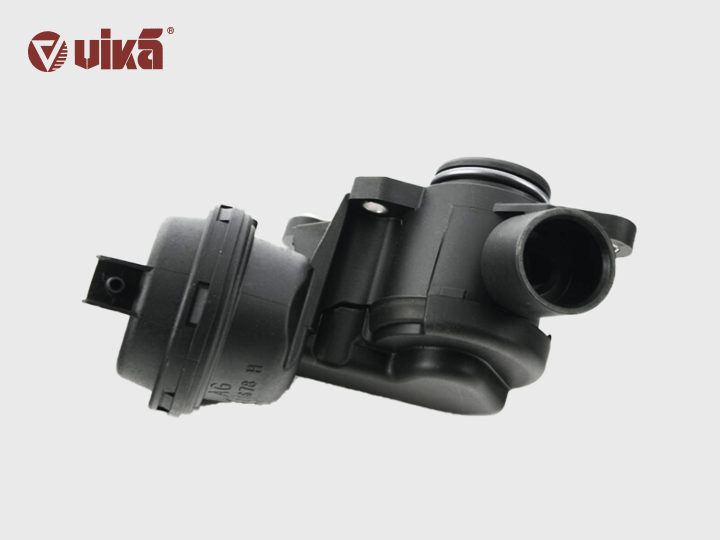
Housing material upgrade: standard PA66-GF30 ➡️ vika upgraded PPA material
Other brands: PA66-GF30 material is used. This material rated for continuous service at only 120°C–130°C. At temperatures exceeding 150°C, it undergoes rapid aging and embrittlement. With a moisture absorption rate of approximately 0.6%, it exhibits significant swelling and compromised dimensional stability. Its resistance to glycol-based coolant hydrolysis is also limited, making it susceptible to micro-cracking and eventual leakage over extended use.
vika upgrade solution: PPA material is used. This material delivers a continuous service temperature of 160°C–180°C, providing outstanding thermal stability. With a moisture absorption rate as low as 0.2%, it ensures superior dimensional stability. Its hydrolysis resistance is three times that of standard PA66, effectively eliminating the risk of valve body cracking and leakage.
Rotor material upgrade: standard PA66-GF30% ➡️ vika upgraded PPS+GF30 material
Other brands: PA66-GF30% material is used. This material exhibits poor creep resistance, making it susceptible to cracking and deformation under sustained high-temperature loads. Its 0.6% moisture absorption also induces minor volumetric expansion of the rotor, which can ultimately result in rotor sticking and functional failure.
vika upgrade solution: Manufactured from PPS+GF30, a preferred material for precision high-temperature automotive applications, the rotor delivers a continuous service temperature of 200°C–220°C. Its near-zero moisture absorption (0.003%) ensures dimensional stability and tight tolerances, even after extended coolant exposure. With superior creep resistance, it permanently prevents rotor sticking caused by deformation.
Rotor sealing ring upgrade: standard EPDM ➡️ vika upgraded peroxide-cured EPDM + PTFE material
Other brands: Standard EPDM has a continuous service temperature of below 120°C and is susceptible to thermal aging under elevated temperatures. Its dynamic abrasion resistance is limited, with coolant leakage potentially occurring after as little as 20,000 km. Moreover, its high coefficient of friction increases the likelihood of rotor sticking.
vika upgrade solution: The material is upgraded to peroxide-cured EPDM + PTFE, with a long-term service temperature of 150°C. It offers excellent dynamic wear resistance and a service life exceeding 100,000 km. Thanks to the self-lubricating properties of PTFE, frictional resistance is extremely low, ensuring smooth rotor operation.
Connector seal ring upgrade: standard EPDM ➡️ vika upgraded peroxide-cured EPDM material
Other brands: Standard EPDM has a long-term heat resistance of up to 120°C. Prolonged exposure to high temperatures accelerates its aging and can lead to leakage at the connection points.
vika upgrade solution: The material is upgraded to peroxide-cured EPDM, with a long-term service temperature of 150°C. It offers stronger resistance to compression set and thermal-oxidative aging, ensuring longer-lasting sealing performance.
Compatibility information
Engine Model; 2.9L(DECA;DKMB)/3.0L(CWGD;CZSA;CZSE;DCBD;DCBE;DLZA)
Connecting the world, igniting the moment! The vika DPA Joy Carnival Season VII is now in full swing. Join the "Happy Planet Storytelling" and share your unique vika DPA story with the world!

Recent News
- -vika Thermostat Assembly: Designed to Solve Coolant Leakage and Check Engine Light Issues
- -Connecting the World and Empowering the Industry! vika DPA Debuts at Automechanika Frankfurt 2026
- -Why Should the Timing Belt and the Coolant Pump Be Replaced as a Set?
- -BMW 7 Series (E65/E66) Door Lock Assembly Fault Analysis and vika Replacement Solution
- -vika Driveshaft Repair Kit: Eliminate Chassis Noise and Vibration
- -Eliminate Rework! Fault Diagnosis of Front Crossmember Bushings and vika Complete Solution


