

Common fault detection methods for an electronic fan
02-25,2026
Failed fan operation
The fan is controlled based on the engine temperature and operation needs of the air conditioning system. Therefore, after replacing the fan, start the engine, turn on the air conditioning system, and allow the fan to run for about 5 minutes. If the fan still does not operate, take the following measures:
1. Check whether the circuit is properly connected (including ACC, GND, PWM, and KL87), and whether the connectors are securely connected with full contact (check the positive and negative terminals; for three-wire brushless or controller-based fans: check the PWM signal duty cycle; for four-wire brushless or controller-based fans: simultaneously check the PWM signal duty cycle and the on/off status of KL87);
2. After a power outage, rotate the fan blades manually to check for any sticking;
3. Check whether the radiator temperature sensor has failed;
4. Check if the fan model matches the vehicle model.
Constant high-speed fan operation
The fan operates according to the instructions issued by the engine control unit. If the fan keeps running at high speed, the following checks should be performed:
1. Check the PWM signal duty cycle to confirm whether the fan operates as needed by the system (for four-wire brushless or controller-based fans, if the PWM signal wire is disconnected, the fan will run at high speed in emergency mode);
2. Check the temperature sensor, throttle valve, and water pump;
3. Check if the fan model matches the vehicle model.
Continued fan operation after engine shutdown and power-off
To protect the engine, some vehicle models are equipped with delayed fan shutdown function. After the engine is turned off, the fan may continue to run for a few minutes, which is normal. If the fan keeps running for an extended period, it is considered abnormal.
Abnormal noise of the fan
If the fan produces any noise other than wind sounds due to high-speed operation, check whether there are any foreign objects that have scraped or collided with the fan bracket.
Fan vibration
Check if the fixing screws are tightened, if the fan blade balancing clip is detached, and if the fan blades are heavily deformed.
Lack of high-speed or low-speed capability of the fan
Some vehicle models have a fan with both high and low speed settings. If the fan only operates at one speed setting, check whether the radiator temperature control switch is faulty.
Continued fault code
If the fault code persists after the fan is replaced and the fault code is cleared, check if the fan model matches the vehicle model, and check for any functional limitations.
Take appropriate measures based on the fault symptoms and perform timely repair or replacement. It is recommended that the fan bracket should be replaced together with the fan. Choose a high-quality brand of fan to guarantee a long service life.
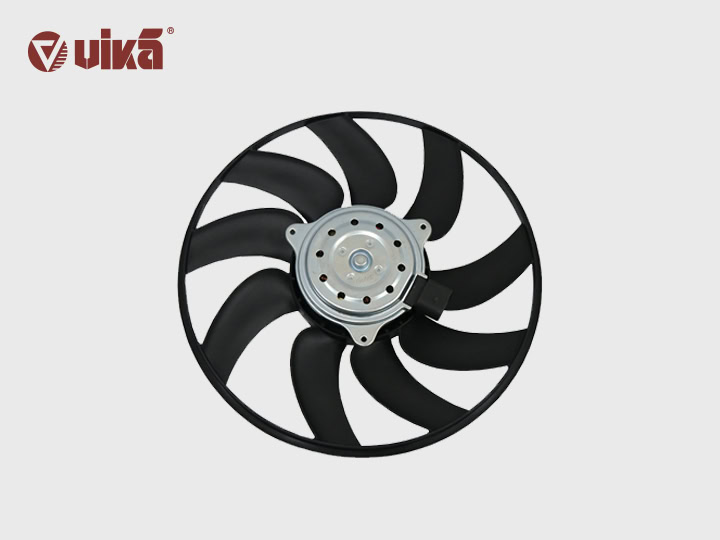
Advantages of vika electronic fans:
1. Upgraded noise reduction
The vika electronic fans achieve a balance between temperature and wind resistance indicators, ensuring precise temperature interaction. Their wind noise is 20% lower than other brands in the market.
2. Upgraded vibration reduction
The motor, fan, and motor assembly all feature an anti-vibration design to ensure precise balance of components during high-speed rotation.
3. Upgraded process
The rotor blades of vika electronic fans are manufactured through one-step forming using a fully automated and highly mechanized high-speed press, thus ensuring consistent product performance.
4. Upgraded material
The motors of vika fans are based on OE electronic control module technology, which ensures smooth motor startup and precise rotation under various working conditions, thereby reducing engine power loss.
Recent News
- -Fix Audi Noise & Steering Pull: vika Control Arm Bushing Kit
- -VW 1.6 2.0 TDI Tandem Pump 04L145208D: Failures & vika Fix
- -vika Steering Tie Rod Repair Kit: Fix Chassis Noise & Drift
- -vika Thermostat Assembly: Designed to Solve Coolant Leakage and Check Engine Light Issues
- -Connecting the World and Empowering the Industry! vika DPA Debuts at Automechanika Frankfurt 2026
- -Why Should the Timing Belt and the Coolant Pump Be Replaced as a Set?


