

VW 1.6 2.0 TDI Tandem Pump 04L145208D: Failures & vika Fix
09-30,2026
The engine oil and vacuum tandem pump is a critical component serving both the engine lubrication system and the brake assist system. A pump failure can result in catastrophic engine damage and present severe braking safety hazards.
Common failure symptoms of engine oil and vacuum tandem pump
A degraded tandem pump typically causes simultaneous issues across both lubrication and vacuum circuits:
Low Oil Pressure at Idle: Internal hydraulic loss causes low oil pressure warnings on the dashboard during engine idle.
Abnormal Engine Noise & Severe Wear: Oil starvation causes dry friction and ticking noise in the hydraulic valve lifters/tappets. In severe cases, dry friction at the crankshaft and rod bearings leads to cylinder scoring, bearing seizure, and complete engine failure.
Poor Brake Boost Performance: Oil migration into the vacuum lines causes loss of vacuum power assist, resulting in a hard brake pedal and increased stopping distance.
Difficult oil suction and reduced oil pressure.
Typical Service Life and Replacement Intervals
Based on technical field data, tandem pump degradation typically peaks within the following ranges:
Service Lifespan: 8–10 Years
Mileage Range: 120,000–150,000 km (approx. 75,000–95,000 miles)
Note: Operating a tandem pump beyond these intervals significantly increases the risk of pilot valve core wear and elastomeric seal failure. Proactive inspection or preventive replacement is highly recommended.
Root Cause Failure Analysis
PPS Plastic Pilot Core Material Defect: Standard pilot valve cores made from Polyphenylene Sulfide (PPS) plastic exhibit low surface hardness. Heat cycling and friction from oil debris cause rapid wear and binding, resulting in insufficient oil delivery.
Pilot Valve Core Binding: Valve spool binding restricts oil delivery, triggering hydraulic valve lifter noise and severe crankshaft bearing wear, ultimately leading to engine seizure.
Oil Ingress into Brake System: Because the oil pump and vacuum pump share a single housing, internal seal failure allows engine oil from the feedback circuit to seep into the vacuum line. This destroys the brake booster diaphragm, causing loss of power assist and a hard brake pedal.
Oil Strainer Clogging: Sludge, carbon deposits, or metallic debris clogging the suction strainer restrict oil draw, starving the engine of oil.
vika Tandem Pump Upgrade Solution: Engineered Material Upgrades
To eliminate factory design vulnerabilities, vika has upgraded the key internal components of the Engine Oil and Vacuum Tandem Pump, ensuring long-term reliability.
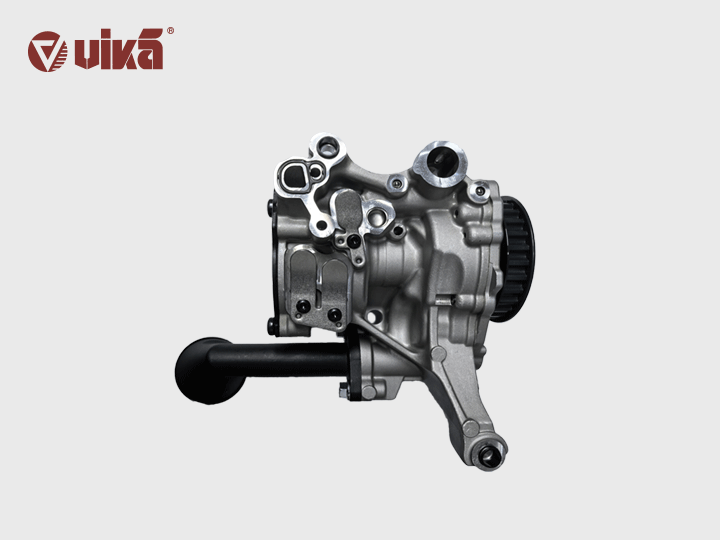
6061 Aluminum Alloy Pilot Core: Features deep hard anodization for superior surface hardness, wear resistance, and binding prevention.
Fluoroelastomer (FKM) Seals: Delivers excellent heat resistance and minimal compression set for leak-free long-term sealing.
Pilot valve core material comparison:
| Comparison item | vika | Others |
| Valve core material | 6061 aluminum alloy | PPS plastic |
| Surface treatment | Hard anodized treatment (oxide layer depth ≥0.025 mm) | No surface treatment (raw plastic material) |
| Surface hardness | ≥ 400 HV | ≈100 HV |
| Wear resistance | Superior hardness, eliminates core binding, extends service life | Soft material, rapid wear leading to core binding |
Sealing ring material comparison:
| Comparison item | vika | Others |
| Sealing material | Fluororubber (FKM) | Nitrile rubber (NBR) |
| Heat resistance | Excellent thermal and chemical stability | Poor, susceptible to hardening and cracking |
| Permanent deformation rate | Low deformation rate, high long-term sealing reliability | High deformation rate, prone to losing elasticity |
| Brake safety assurance | Effectively blocks oil ingress into vacuum lines | Oil easily enters vacuum circuit, causing loss of brake assist |
FAQs
Q1: Can a failed tandem pump be repaired by replacing only the seal rings?
Not recommended. Pilot valve core wear is typically the primary cause of low idle oil pressure. Replacing only the seals will not restore spool clearance or hydraulic pressure. A complete assembly replacement is strongly advised.
Q2: Will a failed engine oil and vacuum tandem pump cause catastrophic engine damage?
Yes. Hydraulic valve lifter ticking is an early warning sign. Continued operation will lead to dry friction at the crankshaft journal bearings, cylinder scoring, and engine seizure, requiring a full rebuild.
Q3: Will vika's aluminum alloy valve core be heavier and affect response?
6061 aluminum alloy has low density and high strength. After hard anodizing, it combines light weight with high hardness, without affecting the response speed of the valve core.
Q4: When should the engine oil and vacuum tandem pump be inspected?
It is recommended to have it inspected during routine maintenance when the vehicle reaches 120,000 km or is over 8 years old.
Recent News
- -vika Steering Tie Rod Repair Kit: Fix Chassis Noise & Drift
- -vika Thermostat Assembly: Designed to Solve Coolant Leakage and Check Engine Light Issues
- -Connecting the World and Empowering the Industry! vika DPA Debuts at Automechanika Frankfurt 2026
- -Why Should the Timing Belt and the Coolant Pump Be Replaced as a Set?
- -BMW 7 Series (E65/E66) Door Lock Assembly Fault Analysis and vika Replacement Solution
- -vika Driveshaft Repair Kit: Eliminate Chassis Noise and Vibration


